
1. Introduction to Pilates and Abdominal Fat Reduction

Pilates is a mind-body exercise system developed by Joseph Pilates in the early 20th century. It emphasizes controlled, precise movements, core stability, breath awareness, and alignment. The method is designed to build functional strength, particularly in the deep postural muscles of the abdomen, back, and pelvic floor—collectively known as the "powerhouse."
When discussing abdominal fat reduction, it is crucial to understand the physiological distinction between two primary types:
- Subcutaneous Fat: The layer of fat located directly beneath the skin. This is the fat you can pinch.
- Visceral Fat: The fat stored deep within the abdominal cavity, surrounding internal organs. This type is more metabolically active and is strongly linked to increased health risks, including cardiovascular disease and type 2 diabetes.
No single exercise can "target" or "spot reduce" fat from a specific area of the body. Fat loss occurs systemically in response to a sustained caloric deficit, achieved through a combination of diet and overall energy expenditure. The premise that certain Pilates movements are particularly effective for "stubborn belly fat" should be interpreted with this key metabolic principle in mind.
Clinical Perspective: While Pilates cannot selectively burn abdominal fat, its value lies in its ability to build lean muscle mass in the core region. Increased muscle mass elevates basal metabolic rate, contributing to greater overall calorie burn. Furthermore, a stronger, more stabilized core improves posture and can create a more toned abdominal appearance, which may be perceived as a reduction in belly fat.
Evidence for Pilates in fat reduction is promising but should be contextualized. Research, including systematic reviews, indicates that regular Pilates practice can lead to reductions in waist circumference and body fat percentage. However, these outcomes are typically observed when Pilates is part of a comprehensive regimen that includes cardiovascular exercise and nutritional guidance. The evidence is stronger for improvements in muscular endurance, flexibility, and body composition than for direct, isolated fat loss.
Individuals with certain health conditions should exercise caution and seek medical advice before beginning a new exercise program like Pilates. This includes those with:
- Uncontrolled hypertension
- Recent abdominal or spinal surgery
- Certain stages of pregnancy or postpartum recovery
- Acute disc herniation or severe osteoporosis
When practiced consistently and correctly, Pilates serves as an excellent component of a holistic fitness strategy. The following chapters will detail specific movements that effectively engage the core musculature, contributing to strength and stability that supports overall health and body composition goals.
2. Evidence and Physiological Mechanisms

It is crucial to clarify a foundational physiological principle: spot reduction, or the idea of losing fat from a specific body area by exercising it, is not supported by robust scientific evidence. The body mobilizes fat stores systemically, influenced by genetics, hormones, and overall energy balance. Therefore, no exercise, including Pilates, can directly "target" belly fat for removal.
However, Pilates can be a highly effective component of a comprehensive strategy for reducing overall body fat, including abdominal adiposity, through several indirect but well-supported mechanisms:
- Increased Muscle Mass and Metabolic Rate: Pilates exercises, particularly those using resistance (e.g., reformer work), build lean muscle tissue. Muscle is metabolically active, meaning it burns more calories at rest than fat tissue. This can contribute to a higher basal metabolic rate, supporting a sustained calorie deficit necessary for fat loss.
- Improved Core Function and Posture: Pilates emphasizes deep core engagement, strengthening the transverse abdominis, obliques, and pelvic floor. A stronger core improves postural alignment, which can make the abdomen appear flatter and more toned, even before significant fat loss occurs.
- Stress Reduction and Cortisol Management: Chronic stress elevates cortisol, a hormone linked to increased visceral fat storage around the abdomen. The mindful, controlled breathing and focused movement of Pilates can activate the parasympathetic nervous system, helping to modulate stress responses and potentially mitigate cortisol-driven fat accumulation.
- Supporting a Caloric Deficit: A Pilates session can burn a moderate number of calories. When combined with other forms of cardiovascular exercise and, most importantly, a nutritionally balanced diet, it contributes to the overall energy expenditure required for fat loss.
Clinical Perspective: The evidence for Pilates specifically for fat loss is more observational and mixed compared to its well-established benefits for musculoskeletal health, pain management, and functional mobility. Its primary value in body composition change lies in its role as a strength-training modality and its potential to improve exercise adherence due to its low-impact nature. For significant reductions in abdominal fat, it must be part of a holistic plan prioritizing nutritional intake and overall physical activity.
Who Should Exercise Caution: Individuals with uncontrolled hypertension, severe osteoporosis, recent abdominal surgery, or certain spinal conditions should consult a physician or a certified Pilates instructor with clinical experience before beginning. Those with a history of diastasis recti should seek guidance on appropriate core engagement techniques.
3. Contraindications and Specific Population Cautions

While Pilates is a low-impact and generally safe form of exercise, its movements—particularly those targeting the core—are not universally appropriate. Acknowledging contraindications and individual risk factors is essential for safe practice and injury prevention.
Absolute and Relative Contraindications
Certain medical conditions require complete avoidance of specific Pilates movements or the entire practice until cleared by a qualified healthcare provider. These include:
- Acute Injury or Pain: Performing core-focused movements during an acute phase of back, neck, or abdominal injury can exacerbate the problem. This includes herniated discs, acute muscle strains, or recent abdominal surgery.
- Uncontrolled Hypertension: Movements that involve significant isometric contraction (like planks or holding a "hundred") can cause a dangerous spike in blood pressure.
- Osteoporosis with Vertebral Compression Risk: Flexion-based exercises (like rolling or certain crunches) can place excessive force on the spine and increase fracture risk. A modified program emphasizing spinal extension is necessary.
- Certain Abdominal Conditions: Conditions like diastasis recti (separation of the abdominal muscles), hernia, or recent pregnancy require specific, guided rehabilitation. Standard abdominal curls can worsen these issues.
Populations Requiring Medical Consultation & Modification
For other groups, Pilates can be highly beneficial but must be approached with caution and professional guidance. It is strongly advised to consult a physician or a certified Pilates instructor with clinical experience before beginning.
- Pregnant Individuals: After the first trimester, supine (on-the-back) positions should be avoided due to potential vena cava compression. Deep abdominal engagement and certain twisting motions also require modification.
- Postpartum Individuals: Returning to core work requires assessment for diastasis recti and pelvic floor function. Jumping into advanced movements too soon can hinder recovery.
- Individuals with Chronic Conditions: Those with chronic joint instability (e.g., hypermobility syndromes), severe osteoarthritis, glaucoma (due to inverted positions), or cardiovascular conditions need a tailored program.
- Beginners with Poor Baseline Fitness or Obesity: While Pilates can be excellent for building foundational strength, attempting advanced movements without proper core stability and neuromuscular control increases injury risk. A focus on foundational principles is crucial.
Clinical Perspective: The principle of "first, do no harm" applies directly to exercise prescription. A movement is only effective if it is performed safely. A certified Pilates instructor or physical therapist can provide essential modifications—such as reducing range of motion, using props, or selecting alternative exercises—to ensure safety while working toward fitness goals. Disclose your full medical history to your instructor before starting any new exercise regimen.
Ultimately, the goal of targeting "stubborn" areas is best achieved through consistent, safe practice. Listening to your body and prioritizing proper form over intensity or range of motion is the most effective long-term strategy for sustainable results and injury prevention.
4. Five Pilates Exercises for Core Engagement
This chapter details five foundational Pilates exercises designed to engage the deep core musculature. It is essential to understand that no single exercise can "target" fat loss from a specific area like the abdomen. Spot reduction is not supported by scientific evidence. However, a consistent Pilates practice can contribute to overall fat loss by increasing energy expenditure and, more importantly, by building metabolically active muscle tissue. The primary benefit of these movements is to strengthen the core's stabilizing muscles—the transversus abdominis, pelvic floor, and multifidus—which improves posture, supports the spine, and enhances functional movement patterns.
When performing these exercises, focus on precision, controlled breathing, and mindful engagement over speed or quantity of repetitions. Proper form is paramount to prevent strain and ensure the intended muscles are working.
1. The Hundred
This classic Pilates warm-up challenges core endurance and promotes coordinated breathing. Lie supine with knees bent (beginner) or legs extended at a 45-degree angle (advanced). Lift your head and shoulders off the mat, engaging your abdominals to curl your upper back. Pump your arms briskly by your sides for five counts on the inhale and five counts on the exhale, aiming for ten breath cycles (100 pumps).
2. Roll-Up
The roll-up emphasizes spinal articulation and control. Starting supine with arms extended overhead, inhale to initiate a slow, sequential curl of the spine off the mat, reaching toward your toes. Exhale to reverse the movement with equal control, articulating each vertebra back to the mat. Avoid using momentum.
3. Single Leg Stretch
This exercise develops coordination and dynamic stabilization. In a supine position, draw one knee toward your chest while extending the other leg long at a 45-degree angle, keeping your lower back imprinted on the mat. Switch legs in a controlled, bicycling motion while maintaining a stable torso and lifted head position.
4. Double Leg Stretch
A progression from the single leg stretch, this movement challenges core strength under load. From the same supine, curled position, hug both knees to your chest. Inhale as you extend your arms and legs away from your center, only as far as you can maintain abdominal engagement and a neutral or imprinted spine. Exhale to circle your arms back and draw your knees in.
5. Plank
While not exclusive to Pilates, the plank is integrated for its unparalleled full-body stabilization demand. From a forearm or straight-arm position, maintain a straight line from head to heels, actively drawing the navel toward the spine and engaging the glutes. Hold for time, prioritizing form over duration.
Clinical Perspective: These exercises are effective for core conditioning but are not a standalone solution for reducing abdominal adiposity. Significant fat loss requires a sustained caloric deficit achieved through diet and comprehensive exercise. Individuals with hypertension should avoid breath-holding during exertion (like in The Hundred). Those with acute back pain, disc pathologies, osteoporosis, or who are postpartum should consult a physical therapist or physician to ensure these movements are appropriate and to learn necessary modifications.
5. Safety Guidelines and Indications for Medical Consultation
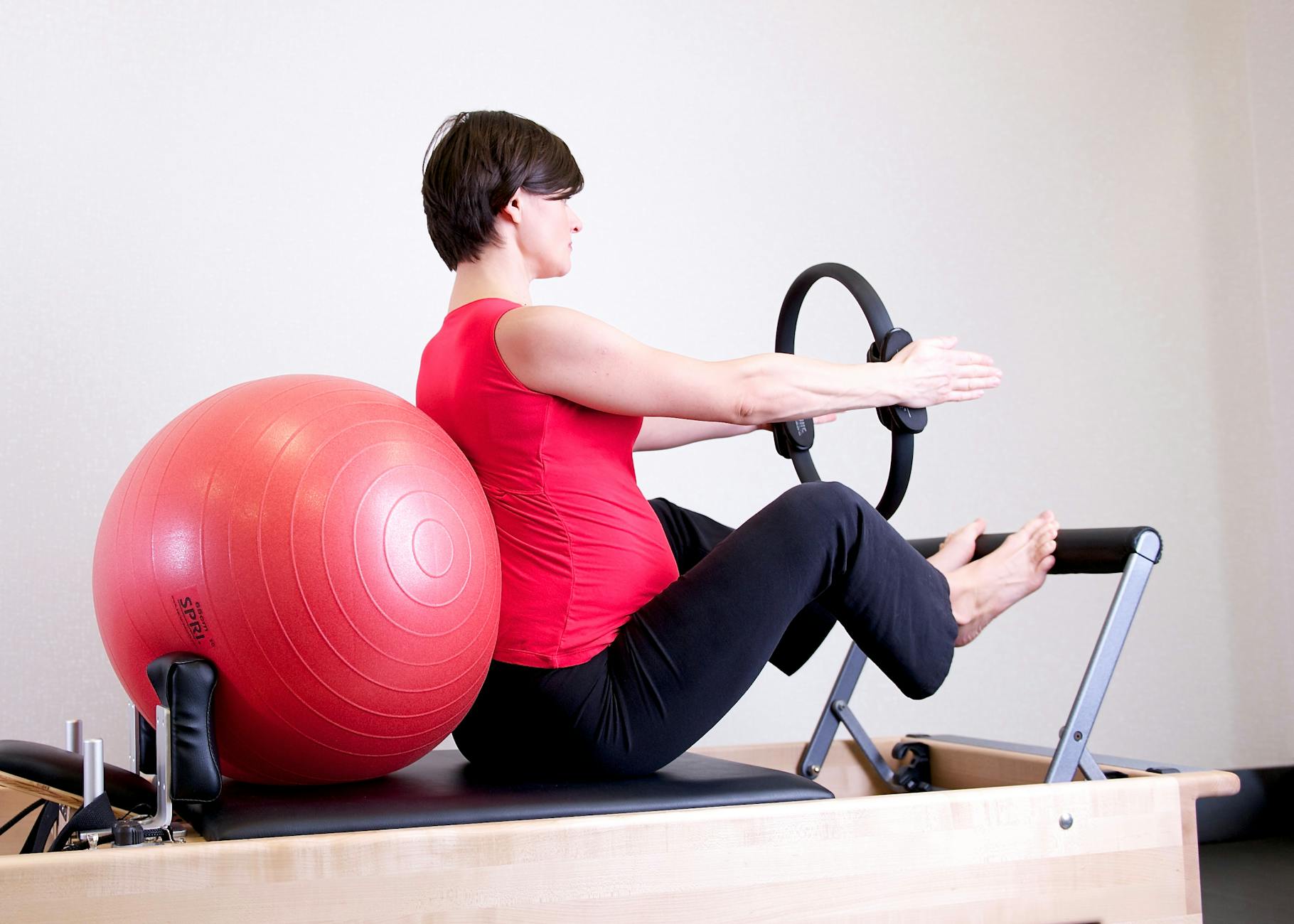
While Pilates is generally considered a low-impact, safe form of exercise, its movements require core stability, spinal articulation, and controlled breathing. Adhering to fundamental safety principles is essential to prevent injury and ensure the practice is beneficial, particularly when targeting the abdominal region.
Core Safety Principles for Practice
Before attempting any new Pilates regimen, consider these foundational guidelines:
- Focus on Form Over Intensity: The efficacy and safety of Pilates depend on precise movement patterns. Prioritize correct alignment and controlled execution over speed or range of motion.
- Engage Your Core Properly: Learn to activate your deep abdominal muscles (transversus abdominis) by gently drawing your navel toward your spine without holding your breath. This protects the lower back.
- Respect Pain: Distinguish between muscular fatigue and sharp, shooting, or joint pain. Pain is a signal to stop and reassess your form or readiness for that movement.
- Progress Gradually: Begin with basic modifications and simpler versions of exercises. Increase intensity, repetitions, or range of motion only when you can maintain perfect control.
Clinical Insight: From a physiological standpoint, no exercise can "spot-reduce" fat from a specific area like the belly. Fat loss occurs systemically with a sustained caloric deficit. Pilates is excellent for strengthening the underlying musculature, improving posture, and contributing to overall energy expenditure, which supports fat loss. However, claims of movements that "target stubborn belly fat" should be understood as building the muscles beneath the fat, not melting the fat directly.
Indications for Medical Consultation
Certain health conditions warrant professional medical clearance before beginning a new exercise program. It is strongly advised to consult with a physician or a qualified physical therapist if you have:
- A current or recent injury, particularly to the back, neck, hips, or pelvis.
- Diagnosed osteoporosis or concerns about bone density.
- Uncontrolled hypertension or cardiovascular conditions.
- Recent abdominal or spinal surgery (typically within the last 6-12 months, but follow your surgeon's specific advice).
- Being in the second or third trimester of pregnancy, or postpartum, without clearance from an obstetric provider.
- Any condition causing severe pain, dizziness, or balance issues.
Furthermore, if you experience any new or worsening symptoms—such as persistent back pain, numbness, tingling, or radiating pain—during or after practice, discontinue the exercises and seek professional evaluation.
6. Questions & Expert Insights
Can Pilates alone effectively reduce belly fat?
No, Pilates alone is not an effective strategy for targeted fat reduction, including belly fat. The concept of "spot reduction" is a persistent myth not supported by exercise physiology. Fat loss occurs systemically in response to a sustained calorie deficit. Pilates is excellent for building core strength, improving postural alignment, and increasing lean muscle mass, which can boost your resting metabolism over time. However, for meaningful fat loss, Pilates must be combined with a consistent cardiovascular exercise regimen (like brisk walking, cycling, or swimming) and, most critically, a balanced, calorie-conscious diet. Think of Pilates as a powerful component of a holistic fitness plan that shapes and strengthens the underlying musculature, making any fat loss more visible.
Who should be cautious or avoid these Pilates movements?
While generally low-impact, certain Pilates movements can pose risks for individuals with specific health conditions. Those with acute back injuries, disc issues, osteoporosis, or severe osteoarthritis should consult a physiotherapist or doctor before attempting exercises that involve spinal flexion, extension, or loaded rotation. Individuals with uncontrolled hypertension should avoid positions where the head is below the heart (like some roll-ups or teasers). Postpartum individuals, especially those with diastasis recti (abdominal separation), require modified programming to avoid exacerbating the condition. If you have any chronic pain, joint instability, or are recovering from surgery, a personalized assessment is essential to ensure exercises are appropriate and safe for your unique anatomy.
When should I talk to a doctor or specialist about my fitness plan, and what should I bring?
Consult a healthcare provider before starting any new exercise program if you have a pre-existing medical condition (e.g., heart disease, diabetes, chronic kidney disease), are pregnant, or are taking medications that affect heart rate or balance. It is also prudent to seek advice if you experience pain (not to be confused with muscle fatigue) during or after exercise. For a productive conversation, bring a clear list of your current medications, a brief history of relevant injuries or surgeries, and specific details about the exercises you plan to do (e.g., "I'm following an online video that includes Pilates roll-ups and leg circles"). This allows your doctor or a physical therapist to provide tailored modifications and safety guidance, turning a generic workout into a personally optimized one.
How long does it take to see results from a Pilates routine?
Results manifest at different rates and in different forms. Improvements in posture, core engagement, and movement awareness can often be felt within a few weeks of consistent practice (e.g., 2-3 sessions per week). Visible changes in muscle tone and definition, particularly in the abdominal area, are contingent on your overall body fat percentage and may take several months of combined exercise and nutritional discipline. It's crucial to manage expectations: high-quality evidence on Pilates for fat loss is limited, with many studies having small sample sizes or short durations. Sustainable results come from consistency, not intensity. Focusing on non-scale victories—like being able to maintain a plank longer or experiencing less low-back pain—provides more meaningful and motivating feedback than daily measurements.
7. In-site article recommendations
8. External article recommendations
9. External resources
The links below point to reputable medical and evidence-based resources that can be used for further reading. Always interpret them in the context of your own situation and your clinician’s advice.
-
mayoclinic mayoclinic.orgPilates movements – Mayo Clinic (search)
-
drugs drugs.comPilates movements – Drugs.com (search)
-
healthline healthline.comPilates movements – Healthline (search)
These external resources are maintained by third-party organisations. Their content does not represent the editorial position of this site and is provided solely to support readers in accessing additional professional information.